
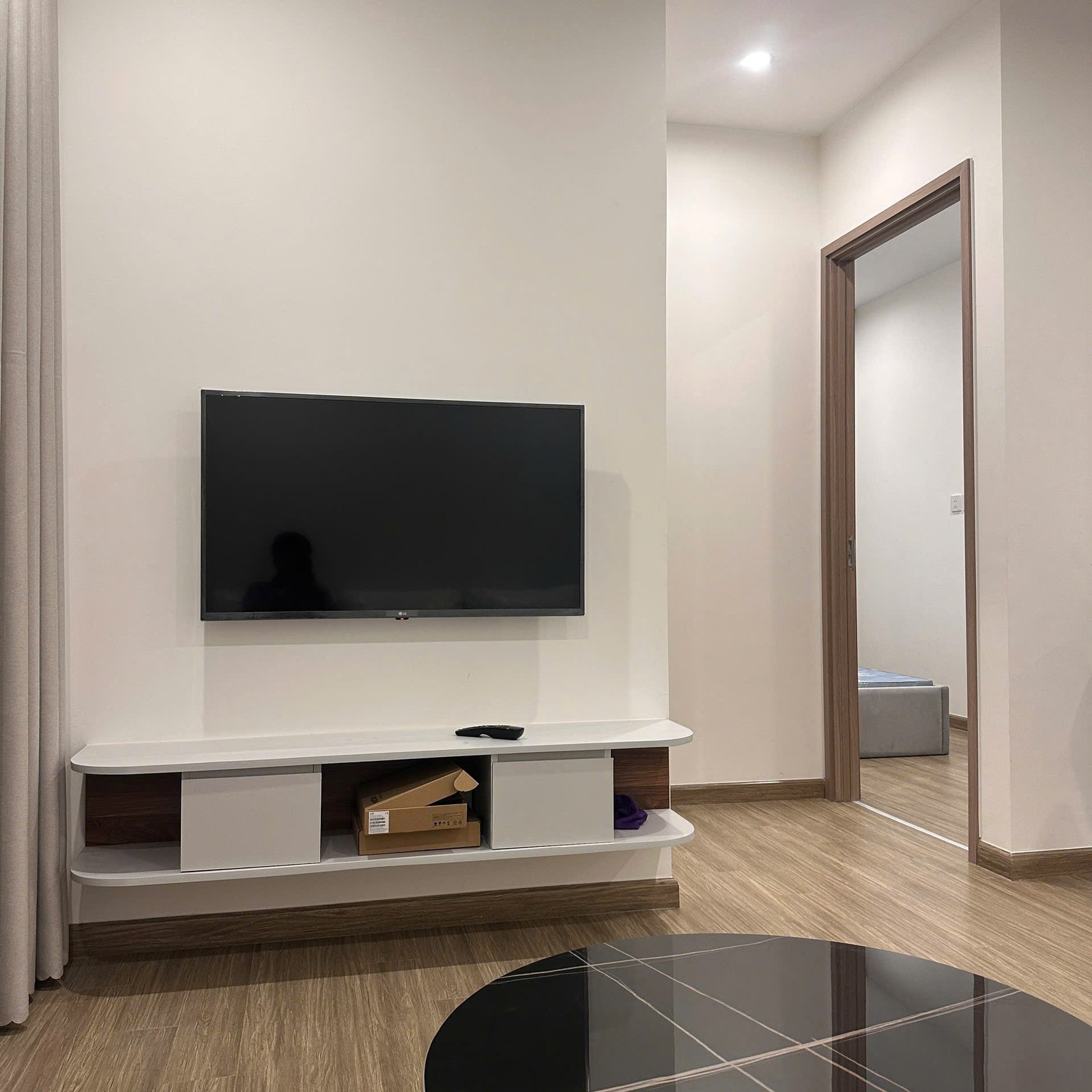

Introduction to apartment interior design
Apartment interior design does not start with buying beautiful furniture. It starts with how the household actually lives every day. For a two-bedroom apartment of the commonly found 60–96m², the challenge is not to fit in more furniture, but to arrange the home so it stays tidy, bright, and comfortable for the long term. This article gathers practical layout principles that work for a home to live in, a home to rent out, and a home being prepared for sale. Good apartment interior design makes a home work hard for everyone who lives in it.
Table of Contents
1. Apartment interior design starts from how you live, not from the furniture
Before choosing a sofa or a dining table, answer a few simple questions: how many people live here, does anyone work from home, do guests visit often, is there space needed for a stroller or sports equipment? A multi-generational family will need a quiet bedroom and more storage than a young couple. Once needs are clear, the layout stops being guesswork: spaces used often stay generous and airy, spaces used rarely stay compact.
The 60–96m² range is very common for two-bedroom apartments in Hanoi. For example, the A2 Ecolife Capitol apartment (58 To Huu, Trung Van) is 75m² with two bedrooms, listed for rent at VND 12.5 million per month; the R4B Royal City apartment (72A Nguyen Trai, Thanh Xuan) is 96m² with two bedrooms, listed for rent at VND 20 million per month. Both sit inside this range, yet the right layout differs, because the larger home has over 20m² more to work with — the smaller home must save every square metre, while the larger one can afford a work corner or a separate dining area.
2. Apartment interior design for a living room open to the kitchen
For a two-bedroom apartment, a living room open to the kitchen is usually the most effective solution. Without partition walls breaking up the shared space, daylight travels through the apartment, and the person cooking can still talk to people in the living room. To keep this area from looking messy, follow a few rules: place the dining table near the kitchen for easy clearing, let the sofa face away from the kitchen or use a low shelf as a soft boundary, and always leave a passage wide enough for two people to pass each other comfortably.
The kitchen should follow the order of use: fridge, sink, and cooker in a short sequence, so the cook does not have to walk around an island just to fetch one item. For a rental apartment, a kitchen that is compact and easy to clean matters more than an elaborate one, because a new tenant can move in without repairs. That order is a basic rule of apartment interior design, and it works in homes of every size.
3. Apartment interior design: light and colour for a bright, larger-looking home
Natural light is free “furniture” that many apartments underuse. Sheer curtains in light colours, a mirror placed opposite a window, and furniture with raised legs that reveal the floor will all make an apartment feel more spacious. In the evening, split lighting into layers: ceiling light for shared activities, a table lamp for a reading corner, under-cabinet lights for cooking. A single light source in the middle of the room usually leaves corners dark while glaring in the centre.
For colours, neutral tones — warm white, beige, light grey, light wood — are the safest choice for 60–96m² apartments. Accent colours should appear only in a few places, such as cushions, wall art, or one wall behind the sofa. Neutral tones are also an advantage for a rental or sale property: viewers can easily picture their own belongings in the home instead of having to live with a previous owner’s very personal colour scheme. Neutral colours are the safest starting point in apartment interior design because they suit most furniture and future buyers.
4. Apartment interior design: smart storage for a tidy small home
Two-bedroom apartments often lack a storeroom, so storage must be planned from the start rather than fixed later with extra freestanding cabinets. Floor-to-ceiling built-in wardrobes in the hallway, beds with drawers, a foldable dining table, and tall shelves in a work corner are familiar solutions that work well. The general rule: rarely used items go up high, everyday items stay within reach, and every item has a fixed place to return to.
A smaller example in this range is the mini apartment in lane 108 Nguyen Trai (Thuong Dinh, Thanh Xuan), 60m² with two bedrooms, listed for rent at VND 12 million per month. At 60m², keeping the floor clear matters even more: push furniture against the walls, avoid tall cabinets blocking walkways, and favour multi-purpose furniture such as a sofa bed for overnight guests instead of a second fixed bed.
5. Apartment interior design for rental or sale: durable, neutral, easy to replace
For a rental apartment, choose furniture that is durable, easy to clean, and easy to replace piece by piece: a sofa with removable washable covers, scratch-resistant table tops, floors that are easy to mop. Avoid furniture that is too expensive or too unusual, because each new tenant has different tastes and wear is hard to avoid. A fully furnished, clean, and bright apartment is usually easier to rent than one crowded with furniture — which is also why rental listings that state “fully furnished” always catch house-hunters’ attention. Durable, neutral choices are the heart of apartment interior design for homes that will be rented out.
For a property for sale, neutral interiors help buyers picture their own life in the apartment. For example, the Sunshine Riverside apartment (Phu Thuong, Tay Ho) is 62m² with two bedrooms — this is a sale listing, priced at VND 6.5 billion — and it also falls inside the 60–96m² range. Whether buying to live in or to rent out later, buyers value a bright, tidy apartment that needs little work before moving in.
A note before altering a rented apartment
If you are renting and want to change the interior, agree with the landlord in writing first: what may be altered, who pays, and whether the apartment must be restored to its original condition when you move out. Changes such as drilling walls, replacing kitchen appliances, or repainting the whole apartment should all be confirmed in advance, to avoid disputes at the end of the tenancy. For your own apartment, keep invoices and warranty information for major appliances to make later repairs easier.
Conclusion: apartment interior design for 60–96m² homes
Interior design for a 60–96m² two-bedroom apartment does not need to be elaborate: understand how the household lives, keep the living room open to the kitchen, make the most of light, plan storage in advance, and choose neutral colours. Done well, these basics make a home pleasant to live in — and easier to rent out or sell when needed.
Readers looking for a two-bedroom apartment in Hanoi can browse more apartment listings on Minh Tam Realty’s apartment category page. Contact: Minh Tam Realty, 54 Le Van Luong, Hanoi, hotline 0934582556, email info@minhtamland.com.vn.

